Joe
blue belt

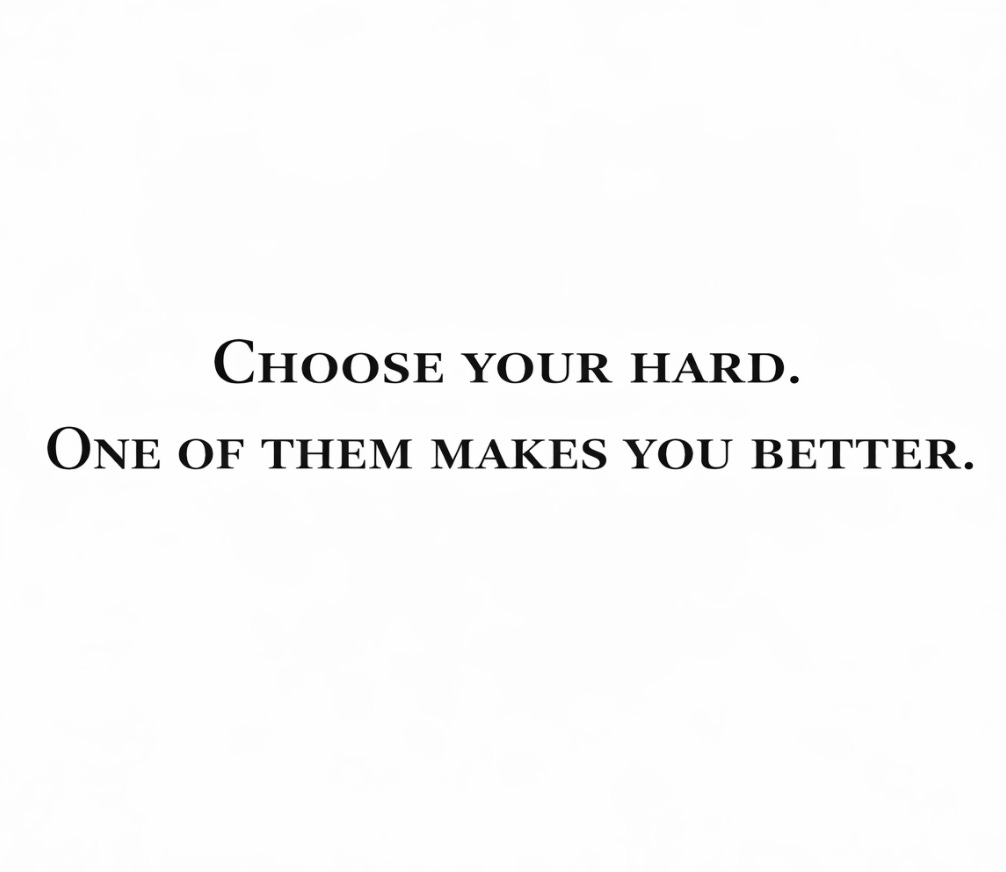
Jiu-jitsu is how I center myself. It’s humbling and confidence-building at the same time. It’s also my space—a retreat from work, marriage, kids, and dogs. I love them all, but life is tiring. Training is tiring too, but it’s the kind of tired that’s for me. Honestly, it’s also for my wife, because I’m noticeably less irritable when I train. As I get close to 50, everything hurts anyway. I can wake up sore from sleeping wrong or from BJJ. Choose your hard. At least one of them makes you better.
What jiu-jitsu teaches me off the mats is just as valuable: staying calm in chaos, finding leverage instead of forcing outcomes, and knowing when to breathe. A few months ago, I was on a jam-packed shuttle bus because the G train was out of service. I wedged myself into a seat between two people, one of them a heavy-set woman. I tried to take up as little room as possible. She said something rude—I don’t even remember the words now. My first instinct was to snap back. Instead, I took a breath, smiled, and said something like, “Have a blessed day.” She softened immediately. She even said “excuse me” as she got off. That’s jiu-jitsu.
Q: How long have you been training?
My time in Jiu-Jitsu has not been linear, but I’d say the total is the equivalent of about three to four years. Martial arts have been a consistent and significant part of my life for the past 30 years. I started Shotokan Karate in 1995. This led to Judo in 2008 when a karate instructor (who was also a Judo black belt) invited me to his school to improve my takedowns. Around 2009, my Judo instructor, who trained BJJ under Matt Serra (and in turn taught Judo at Serra’s school), added BJJ and Muay Thai classes to his school. I decided to double up and do some back-to-back classes on the days I was there. My goal at the time was to improve my ne-waza for Judo and my striking for Karate.
However, I had to have a major shoulder surgery (anchors to re-attach my labrum) from Judo, and that combined with moving, getting married, and having children, derailed my grappling practice. After about a dozen years away, I returned to BJJ in January 2023 with my six-year-old son at Renzo’s in Brooklyn. I didn’t even wear my two-stripe white belt until I was told to. I was consistent for a couple of years until this past August, when I tore my rotator cuff; I was anxious to return, even just for drilling, while I continued to heal.
Q: What belt are you currently?
I am a Blue Belt (with two stripes), promoted by the amazing Daisuke Yamaji.
I was a Green Belt in Judo until my 2011 shoulder injury.
I was an active 4th Degree Black Belt in Shotokan Karate from 2014 until Covid.
I also earned a Level I basic instructor certification in Doce Pares Escrima over the years (to improve my stick and knife fighting/self-defense).
Q.: What was your original goal when you started? How has that changed over time?
My primary goal was to get back in shape and return to the idea of Shoshin (Beginner’s Mind). After almost three years off due to Covid, I was gaining a bit of weight, felt more irritable, and missed the camaraderie of a martial arts school. At my age, I felt returning to Judo was too risky for injury. Now living near Renzo’s in Brooklyn, and wanting to get my son into grappling as well, the timing felt right. And I want to see another art from white to black belt, as I had hoped would happen years ago with Judo.
My goal hasn’t changed. The core goals remain: staying in shape, learning, progressing, enjoying the camaraderie, and finding a healthy way to let off steam. It’s also about developing the confidence to resolve a situation without having to rely on striking.
Q: Tell me about your first day on the mats.
I remember one of my first groundwork classes was a special workshop led by Master Toshikazu Okada at Judo Sports on Long Island (before the school became Team Combat and now Team Believe). He was a Judoka but a ne-waza specialist. I was so impressed by how fluid and precise this 75-year-old man was in his ground transitions, and how often it was a game of centimeters. Less than an inch off in any direction, and you might have nothing, but with the most minor, precise adjustments, you had total control. I was amazed at the subtle difference and in seeing it even within the varying levels of black to white belts.
Q: Do you spend time with teammates outside the gym? How would you describe those friendships?
I do, but the nature of the friendships has changed over time and schools.
• Past/Deep Connections: The best man at my wedding was a childhood friend from ice hockey who got me into Karate; we even moved to Japan together shortly after college. He is now Bruno Malfacine’s first student to go from white to black belt in BJJ. We can still spend endless hours talking about martial arts, and I wish he didn’t live so far away. I’d definitely be a lot better if he were nearby, though my wife might also divorce me, given how much we talk about it and how inevitably we start rolling/practicing when we are together. At my old Judo/BJJ school on Long Island, which was a tough reverse commute, I continued for years specifically because of the camaraderie. We would also regularly go out for food/drinks—I even remember Serra joining us for a beer just a couple of weeks before his rematch with GSP.
• Current/Community: Since joining Renzo’s, I get together occasionally with some of the guys after big promotions or farewells when people move away. It’s a really nice sense of community. We sweat like crazy trying to choke each other out and break limbs, then apologize for those accidental knees to the head and go off to grab a drink together. Most people who don’t train just don’t get it. We also connect on a WhatsApp channel, and I’ll often run into teammates for a quick chat; that makes my neighborhood feel like a neighborhood to me. It’s also a funny mix of ages and backgrounds: the morning class is mostly older family guys, while the evening classes are younger blokes.
Q: Who is your favorite training partner and why?
My favorite partner at Renzo’s was a purple belt who was about my size and was promoted to brown belt right before he moved to Texas at the start of the summer —I was truly bummed when he left.
His tokui waza (favorite technique) was the triangle, so I made it my personal mission not to let him catch me in it. I helped him evolve his game by forcing him to develop follow-up attacks after I eventually developed a successful defense. And with my bit of a Judo background, I helped him with his takedowns. I had a tremendous amount of trust and fun rolling with him.
I know better than to say anything about landing that rare submission on a higher belt—we all know they aren’t going full force, and they’re giving you a better position to work. But man, it still feels good when it happens, mainly because it’s so rare!
The most memorable moments for me are more of the special guests I have gotten to meet. Meeting Renzo a couple of times, learning from the GOAT, and having him take a picture with my kids was great—he is so friendly and such a great guy. Over the years, having had lessons with Serra, Judo Olympians, and Joe Moreira (from the original UFC days), they are all incredibly friendly and kind, yet so lethal and impeccable in their form and knowledge. It’s inspiring.
Q: Worst injury?
My most significant grappling injury was many years earlier, during Judo/BJJ training: I was rolling with Joe Scarola (Serra’s first Black Belt) right after he finished filming TUF, but before it aired. He had a strong position for a yoko o-soto gari, and I stupidly rooted my foot, trying to fight through the throw. My knee popped, and the subsequent surgery for my ACL/MCL/Meniscus tear led to my surgeon—a former Yankees team surgeon—telling me he’d never seen such a “ball of a mess” on an MRI before!
The most profound lesson in perseverance came during my 3rd-degree black belt test in Karate almost 20 years ago. The test started with board breaking, and I broke my hand during a four-directional break (I broke all the boards in all directions, including the three stacked in the 4th direction, but my hand went with it!). I had to complete the rest of the multi-hour test—including more board breaking, various throws/chokes, kata (with and without weapons), and self-defense drills, fighting, etc, with a ballooned, broken hand.
Q. If you could advise your white-belt self, what would you say?
• It’s not about winning every round. Check the ego and take ownership of your development journey.
• Play the positions you suck at until you suck less (something I still really need to do more often!). Keep working on one thing week after week until it becomes reflexive. Don’t get lost in the “move of the day”—it’s too much for the (my) brain to absorb, especially for us old folks nearing 50.
• Relax into the moves more. Use less muscle and resist the urge to overcompensate physically.
• Find people with whom you can get at least one flow roll per class, so you can better see what is happening and improve your reactions.
Q: If jiu-jitsu disappeared tomorrow, what would you miss most?
It did disappear for me, but I recently returned to the mat. I missed the camaraderie, the sweat, and the feeling of simultaneous growth and humility. It’s the challenge and the motivation to keep going—the feeling of being better than I was the day before, even if I still don’t feel like I’m that good. That feeling in the pit of my stomach, like I wanted to skip, but pushing through that and being happy every time I do is what continually helps me grow by getting comfortable with being uncomfortable.
This is part of a weekly series on the people who make up jiu-jitsu culture.