Sal
white belt

Imagine a white-collar refinery. If Wall Street is the machinery, I’m the guy turning the gauges. When something breaks, when something spills, I’m the one putting on the hazmat suit and fixing it so the system keeps running.
Q: How does that connect to jiu-jitsu?
In jiu-jitsu, when a problem shows up, you can’t think about anything else. You lock in, feel it out, and eventually solve it. That’s what my job is like. Problems can look scary, sometimes even insurmountable. But once you focus, you realize you can work through them.
Q: You’ve previously mentioned the “20–50–80 rule.” What’s that?
In striking sparring, you don’t want to hurt your training partner. So the rule is:
20% power to the head
50% to the body
80% to the legs
Your legs can take it. Your body can absorb it. Your head? If I hit you at 80%, you won't remember differential equations tomorrow. It’s about control. Same reason you don’t throw elbows or knees without pads. The goal is training, not damage.
Q: What originally got you into martial arts?
Ten years ago, my son was stillborn. His name was Anthony. After that, I was in a complete dark spot. Angry at the world. Drinking too much. Constantly smoking. Making everything worse for everyone around me. I started a weekend ritual. I’d wake up early, drive over 30 minutes to my son’s grave, read him a Dr. Seuss book, talk to him, and tell him I missed him. Then I’d go shoot a compound bow.
Eventually, I started thinking about the things I had wanted him to do—like martial arts. So I found a gym near me and figured I’d try it.
Now, I have been training in Muay Thai and Dutch kickboxing for about ten years. Jiu-jitsu on and off.
Q: What was your first day like?
Everyone was welcoming. That’s something people forget when they’ve trained a long time: how intimidating it is to walk into a gym with no experience. There are bad gyms out there, but most places aren’t like in the movies. There were about eight people in my first jiu-jitsu class. That’s a small group and very intimidating. I didn’t even have proper gear—just track pants and a t-shirt. But once we started drilling, I was shocked by how natural it felt. I was 35 years old, about 230 pounds at the time. Now I’m 188.
Q: So why didn’t you stick with jiu-jitsu full-time?
I love striking. I like boxing. I like mixing things up. Jiu-jitsu helped me learn how to neutralize people, but scheduling killed it. My work hours never lined up with classes. And in jiu-jitsu, consistency matters. If you can train multiple times a week, you progress fast. If you can’t, it’s hard to stay on track. When I finally started getting a better schedule, Covid hit. I lost about a year and a half.
I’ll say this because you’re a dad like me: my daughter got screwed up by Covid. A lot of kids did. She was three when it happened. Masks, isolation—you can’t protect a three-year-old the way you can older kids. Before Covid, she was gaining independence. And that mattered—not just practically, but socially. Being a “big girl,” going to school, all of that. And then it all disappeared. She regressed. And I could see her change. She lost her social skills. One moment that broke my heart was when she told me she was scared her best friend at daycare was going to find a new best friend and she’d be alone. At the same time, my wife was working in vaccine research coordination and research, putting in 16-hour days. I stopped training to be with my daughter.
When I tried to come back, I realized something else: You can train Muay Thai on a bag. You cannot train jiu-jitsu on a bag. I also missed the community. Combat sports look like individual pursuits, but they’re not. There’s a real team dynamic. I can’t count how many times I’ve tapped to an armbar or a guillotine or a triangle, and the guy says, “You did great. If you just adjusted this or that, you’d have escaped.” Or in Muay Thai, someone yelling at you:
“Stay on target.”
“You’ve got this.”
“Push.”
You need accountability. You need people.
Q: What do you like about jiu-jitsu? Anything you dislike?
I love how it teaches you that technique can nullify physical advantages. That’s true across martial arts, but jiu-jitsu makes it obvious. A perfect example is Mackenzie Dern. She’s a strawweight UFC champion—about 115 pounds. She beat Gabrielle Garcia, who competes at around 220 pounds. That doesn’t mean Dern wins every time, but the point is: It’s possible. There’s a way out. That idea matters.
It’s the same in Muay Thai. You could put me in with some 250-pound gym bro, all muscle. I’d have to be flawless, but I could still manage him. I’d chop his legs, attack the knees, and move constantly. The version of me from ten years ago? Overweight. Chain-smoking. Miserable? I’d get flattened immediately. Combat sports teach you how to manage your gas tank. You learn patience, pacing, and restraint. That ties back to the 20–50–80 rule: It’s about control of power, ego, and energy. If someone wanted to fight me outside a bar? I wouldn’t throw a punch. I’d let them miss. Let them exhaust themselves. Missing punches is incredibly tiring and demoralizing. Eventually, they’ll be huffing, puffing, and embarrassed. That’s the moment they‘d realize that there’s always a smarter way.
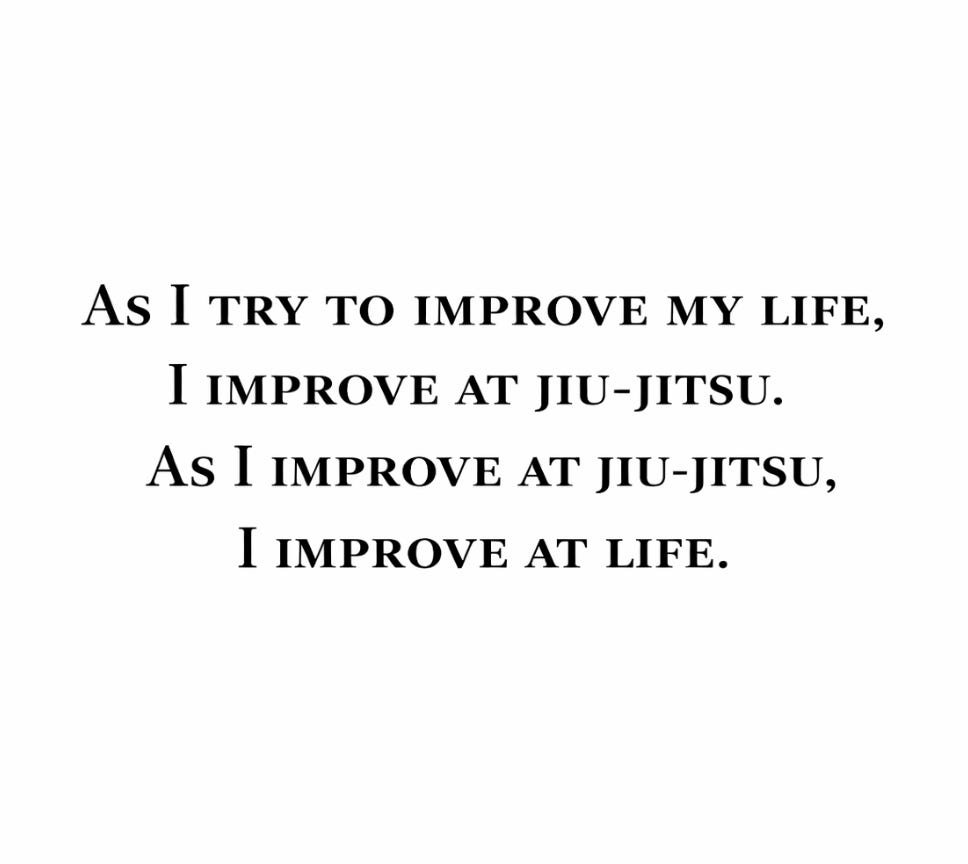
Combat sports force you to become physically and mentally competent. That then spills into everything else.
Q: How does training affect your relationship with your daughter?
It makes me more patient. Much more patient. Most of the time, I train early in the morning before she wakes up, but she worries about me after seeing the bruises. She’s a sweetheart like that.
We’ve been easing her into it slowly. She joined the warm-ups with the adults. I was proud, but I had the Dad glasses on. Later, my wife pulled me aside and said, “She was miserable. You just didn’t see it.” She was right. My daughter doesn’t want to choke people out. She wants princess dresses and dance class. And that’s okay. But recently, something shifted. She came with me while I was warming up for a private lesson. My coach asked her if she wanted to learn a spin kick. Then a leg kick. She liked that. So I bought her these eight-directional striking pads for Christmas—music, lights, the whole thing. She’ll get into it on her terms. That’s the right way.
Q: What about your relationship with your wife?
She says training makes me a better husband—her words, not mine. She told me she likes the person I am now more than the person I used to be. I used to have a violent temper. I wasn’t violent toward her, but I threw things. I was unpleasant to be around. I look at the version of myself from 2014, and the person I am now, and I honestly think the current version would squash the old one. What more could you ask for?
Q: How has training affected your career?
Early white belts eat a lot of shit. You eat it at work too. Jiu-jitsu teaches you that nothing works except showing up again the next day. You build tenacity. You also learn how to read people. Everyone has an identity. Everyone has a facade. For some people, that facade is five feet away from who they really are. Combat sports teach you how to see past that. Once you recognize those people, you don’t confront them. You let them hang themselves, just like on the mat. The mats don’t lie. Neither does sparring. You can look great on pads. Pads don’t hit back. I’ve seen guys who were killers on the pads charge forward in sparring and run straight into a front kick. No effort. They hurt themselves.
That’s the lesson: Don’t rush. Don’t posture. Don’t panic.
Q: What would you say you’d do without jiu-jitsu—or combat sports in general?
For me, it’s about the journey. No matter how good you think you are, you’re lower on the mountain than you realize. You might be a thousand feet up. You feel great—you’ve been grinding, your hands are blistered, you’re exhausted. You look up and think, I’m almost there. And then something sweeps your arms out from under you, and you slide back down again. That is the journey. No matter how much you get broken down, no matter how badly you screw up, pull yourself back up and start climbing again. Most people don’t want that. They get a little way up and say, “I gave it a good shot,” and walk back down. What combat sports give people is the understanding that improvement is constant and nothing is handed to you. You have to fight for everything. You’re going to miss. You’re going to fall. And it’s how you pick yourself up afterward. That’s it. That’s the whole thing.
This is part of a weekly series on the people who make up jiu-jitsu culture.